
Key facts
- Chronic wasting disease was detected in a hunter-killed deer taken from Idaho’s Game Management Unit 13.1
- The disease is spread when infected animals shed malformed proteins known as prions.1 Scientists believe it most often occurs from nose-to-nose contact between animals.1 Prions persist for years on the landscape and can serve as an infection source.1
- CWD was first detected in 2021 in the lower Slate Creek drainage of Unit 14 near White Bird.1 The state worked to thin deer populations there to lower prevalence of the disease and slow or prevent its spread.1
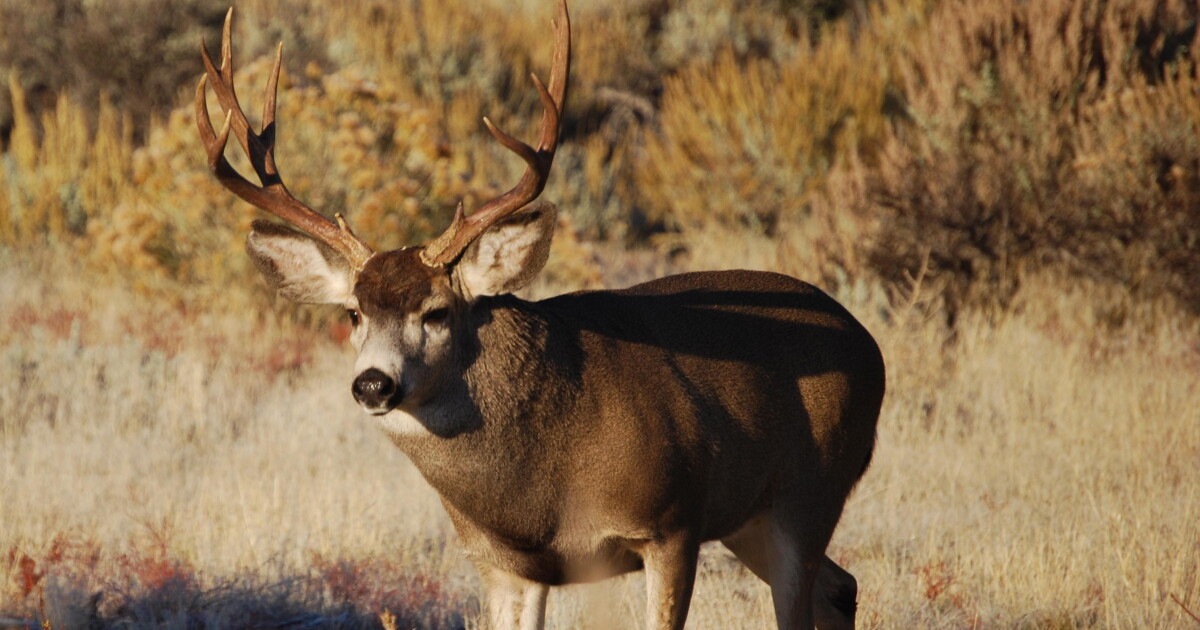
A mule deer buck harvested along the Snake River in Unit 13 has tested positive for chronic wasting disease, marking the first confirmed case of the disease in Idaho’s hunting Unit 13.1 2
The detection occurred about a half-mile from the Oregon border and near a previous CWD detection in neighboring Unit 18, according to Idaho Fish and Game.2
The disease is a contagious and fatal neurological disease that affects deer, elk and moose.2
How CWD spreads
The disease is spread when infected animals shed malformed proteins known as prions..1 Scientists believe it most often occurs from nose-to-nose contact between animals..1 Prions persist for years on the landscape and can serve as an infection source.1
There is no cure for the disease..1 2 The disease can persist in the environment for decades.2
The Centers for Disease Control and Prevention recommends people not eat the meat of animals known to have the disease..1 The disease has never been detected in humans.1
CWD was first detected in 2021 in the lower Slate Creek drainage of Unit 14 near White Bird..1 The state worked to thin deer populations there to lower prevalence of the disease and slow or prevent its spread.1
In addition to units 14 and 18, the disease has been found in wild animals in units 1 and 23..1 Domestic elk have tested positive in southeastern Idaho.1
What comes next
Idaho Fish and Game has tested more than 3,500 deer and elk for CWD so far in 2026, and this is the first CWD detection outside of Units 1, 14, 15, 18, and 23 where deer and elk have previously tested positive.2 3
Until now, positive cases had been detected only in Units 1, 14, 15, 18 and 23.2
With hunting season in Unit 13 now over, wildlife officials are asking the public to help monitor the disease by reporting road-killed deer and elk, animals found dead and animals displaying unusual behavior.2
IDFG Wildlife Health Program Coordinator Stacey Dauwalter said, “These reports and samples are essential to helping us monitor the disease.”2
JJ Teare, supervisor of the Idaho Department of Fish and Game’s Clearwater Region, said the agency is not planning to take any immediate action but will continue to monitor deer in the unit.1
Fish and Game and the Idaho Fish and Game Commission will take the Unit 13 detection into account as they update the state’s CWD management strategy, which typically changes annually as new information becomes available.2